
When you place an order with Dongzhen Heavy, you are not simply buying a product from a catalogue. You are commissioning a piece of equipment that will be built, tested and prepared for shipment around a specification that has been agreed with you. To make sure that work runs exactly as planned, every order is followed through the factory by our business manager, Young, from the moment the drawing is approved to the moment the finished trailer is loaded for export.
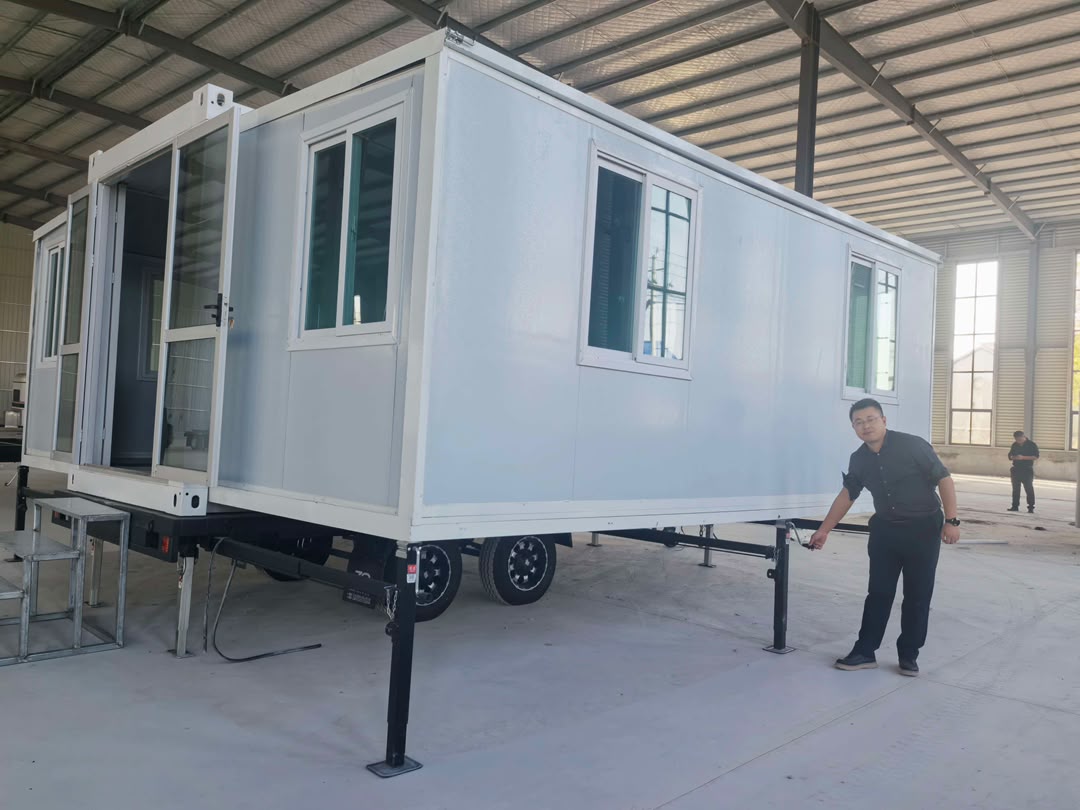
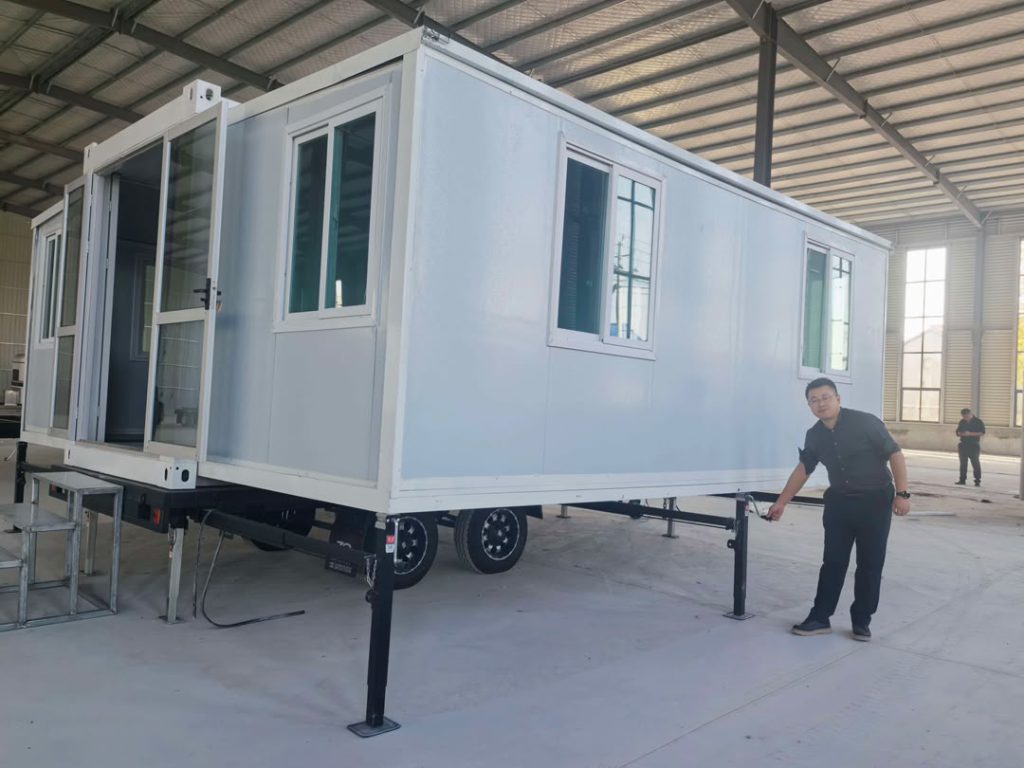
The photograph above shows a white tiny house trailer body sitting on a dual-axle chassis inside our production workshop. It looks straightforward because the visible stage is only the final assembly. Behind it sits a long chain of work that Young follows closely: frame fabrication, welding and rectification, axle and suspension fitting, braking and electrical installation, then the coupling of the finished body or container to the completed chassis.
From Order Confirmation to the Workshop Floor
Young’s role begins the moment a purchase order is confirmed. He translates the specification into a production checklist that the workshop can work from: chassis dimensions, payload rating, tow ball or kingpin arrangement, axle load distribution, suspension type, the electrical and hydraulic scope, and any client-specific requirements such as ADR lighting or an Australian Certificate of Compliance for the finished build.
That checklist is then walked through the workshop stage by stage. Nothing moves to the next operation until the previous one has been checked, because a small deviation early in a build – a misaligned cross member, a coating defect, an incorrect bearing size – turns into an expensive problem much later, after the trailer has already been partly assembled or crated.
What You See in the Pictures
In the second image, Young stands beside a freshly completed black flatbed trailer chassis fitted with dual axles and adjustable support legs. This frame has already passed through welding inspection, surface preparation and paint, and it is fitted with the running gear and electrics that will carry it into service. Checking a finished chassis like this one is a deliberate step rather than a formality: it confirms the welds are sound, the paint finish is acceptable, the axles are correctly spaced and the leg height suits the intended loading arrangement.
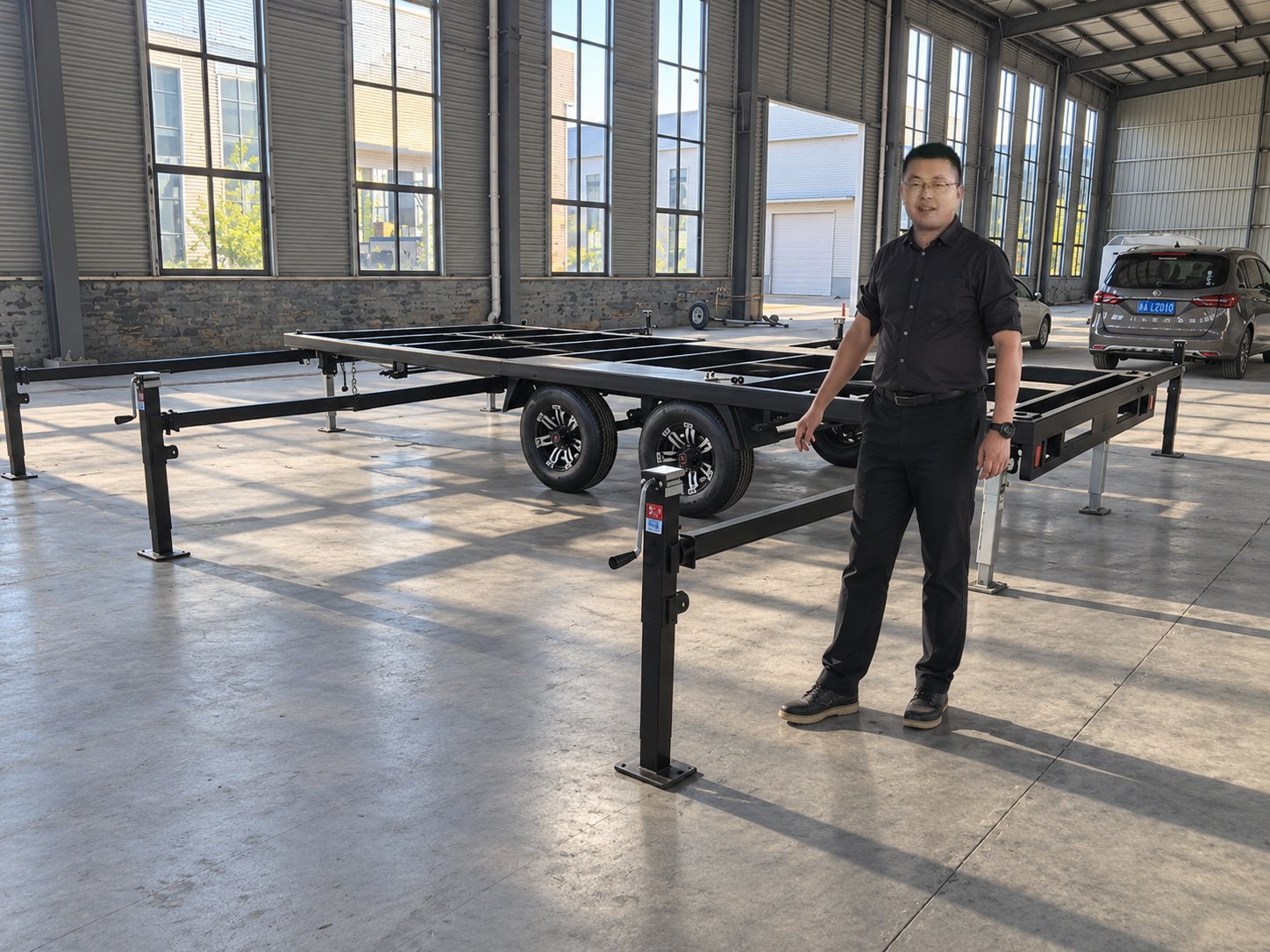
The legs are adjustable because the same chassis is often used for different bodies – a flat top for containers, a deck for general cargo, or the base of a tiny house trailer. Being able to set the deck height correctly on site saves the client from expensive modification work after the trailer has arrived at its destination.
Communication Throughout the Build
Customers are kept informed at the practical milestones rather than left to guess. A typical order moves through updates at frame completion, final assembly, pre-shipment inspection and loading. If a question comes up – a change to the lighting layout, an extra tie-down point, a different paint colour – Young handles it inside the factory where the decision can be made and implemented without losing production days.
That direct link between the person who knows the order and the people building it is what removes the usual friction of remote purchasing. Questions get answered in hours rather than weeks, and problems are caught while they are still cheap to fix.
Built for the Destination
Because DZ Heavy manufactures for export, Young also keeps an eye on compliance for the market the trailer is headed to. Australian customers need the relevant certification and roadworthiness paperwork; European customers need CE conformity; North American buyers need the certification their local authorities require. Verifying these requirements during production, rather than after the trailer is finished, is what keeps a shipment from being held at the border.
If you are working on a trailer order and want a progress update, or you would like to talk through a specification before placing one, contact our team and we will walk you through the build stage by stage – the same way it is handled inside our own workshop.