Choosing the right trailer for your transport business is a critical decision that directly impacts your operational efficiency, safety, and bottom line. With so many trailer types available on the market, making the right choice can feel overwhelming. This guide will walk you through the key factors to consider when selecting a trailer.
Understand Your Transport Needs
The first step is to clearly define what you’ll be hauling. Different cargo types require different trailer configurations:
Bulk materials (sand, gravel, demolition rubble) are best handled by hydraulic tipper trailers, which allow fast unloading through hydraulic lifting.
Machinery and equipment require lowbed or flatbed trailers with reinforced frames and loading ramps.
Vehicles need car carrier trailers with secure tie-down points and multiple deck levels.
Boats and personal watercraft are best transported on purpose-built boat and jetski trailers with water-resistant components.
Payload Capacity and Dimensions
Never compromise on payload capacity. Always choose a trailer with a rated capacity that exceeds your maximum expected load by at least 15-20%. This safety margin accounts for uneven load distribution, dynamic forces during braking and cornering, and future business growth.
Key dimensions to consider:
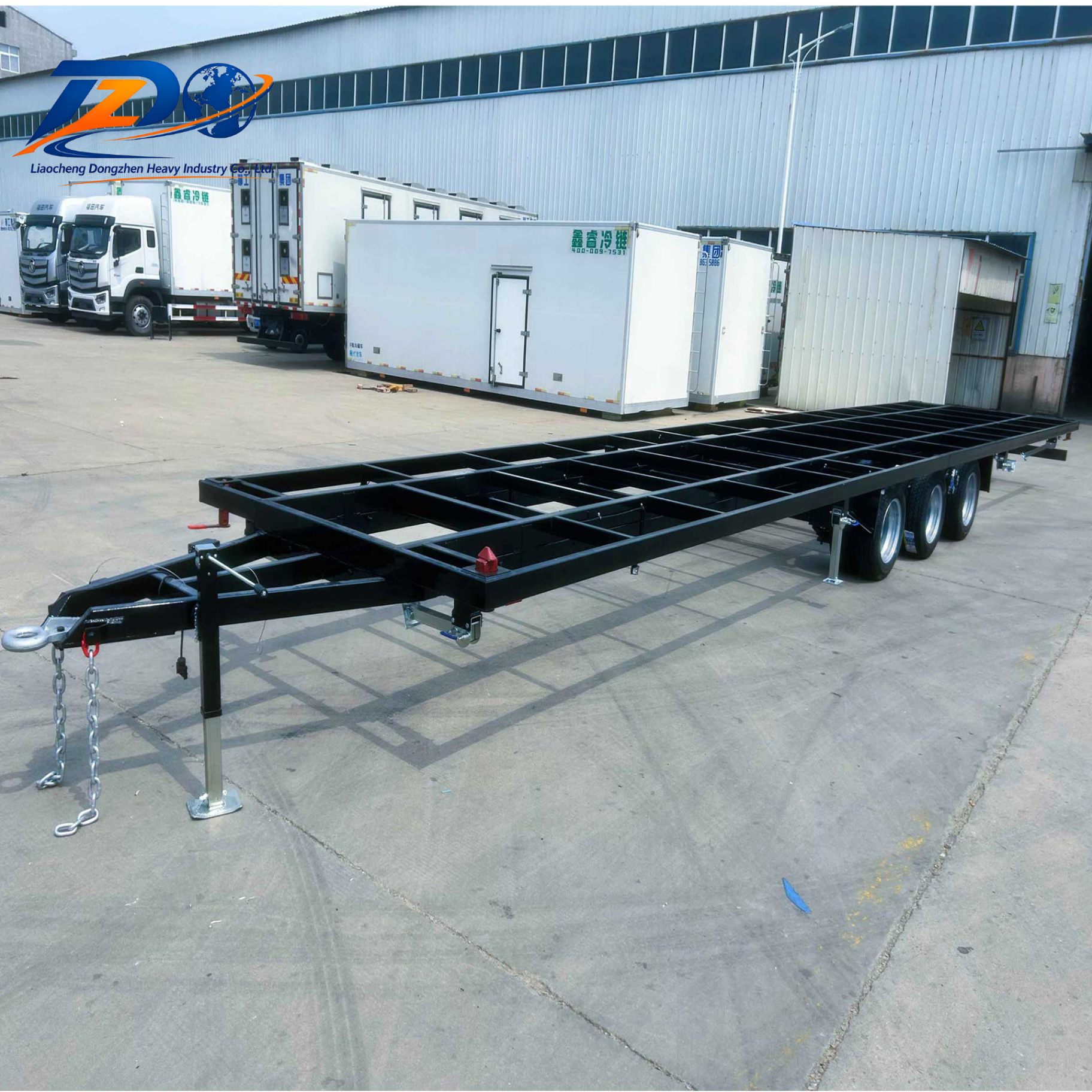
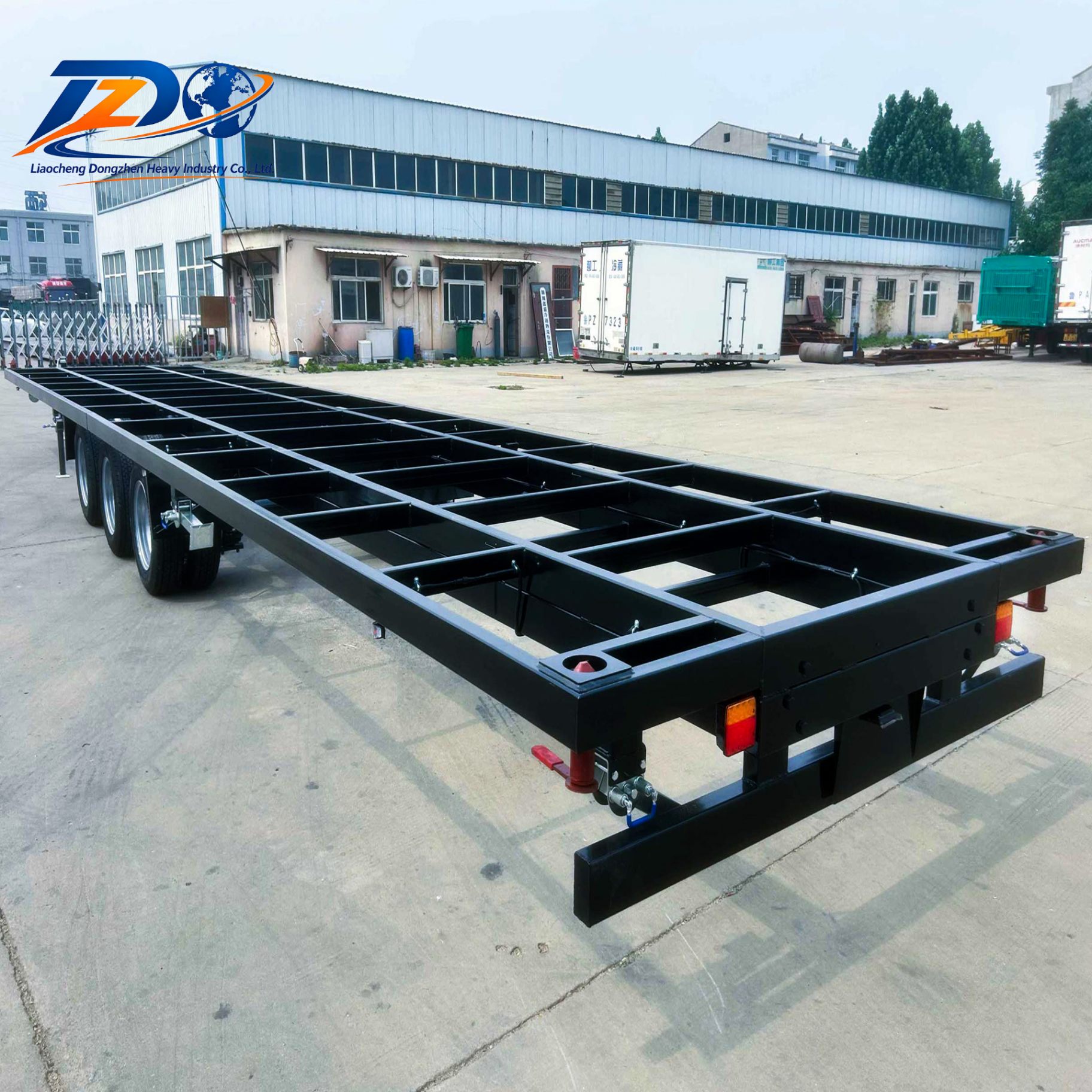
- Deck length: Must accommodate your longest cargo with room for securement
- Deck width: Should match standard cargo widths to avoid overhang
- Side height: Important for bulk materials and containment
- Overall height: Check bridge and tunnel clearance on your routes
Material and Construction Quality
The material of your trailer determines its durability, weight, and maintenance requirements:
Steel offers maximum strength and is ideal for heavy-duty applications. However, it requires regular maintenance to prevent rust, especially in humid or coastal environments.
Aluminium is significantly lighter, allowing higher payload capacity within weight limits. It resists corrosion naturally but comes at a higher initial cost.
Hot-dip galvanised steel combines the strength of steel with superior corrosion resistance, making it ideal for operations in harsh environments like mining sites or coastal regions.
At DONGZHEN Heavy Industry, we use high-grade steel sourced from certified suppliers, with options for hot-dip galvanising to ensure maximum longevity in any operating environment.
Suspension and Axle Configuration
The suspension system affects ride quality, tyre wear, and load stability:
- Leaf spring suspension: Simple, durable, and cost-effective. Ideal for heavy loads on rough terrain.
- Air ride suspension: Provides smoother ride, protects delicate cargo, and reduces road wear. Preferred for high-value loads.
- Torsion axle: Offers independent suspension for each wheel, excellent for lighter trailers.
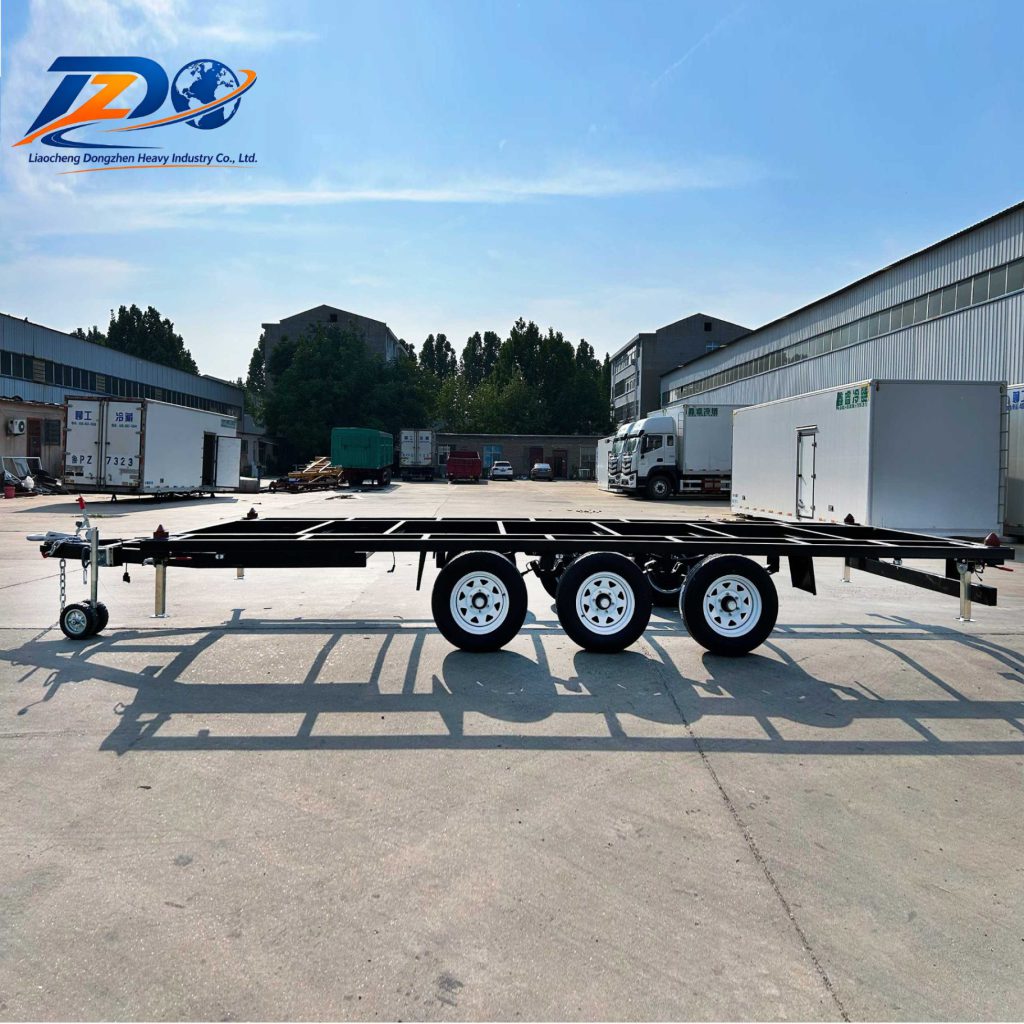
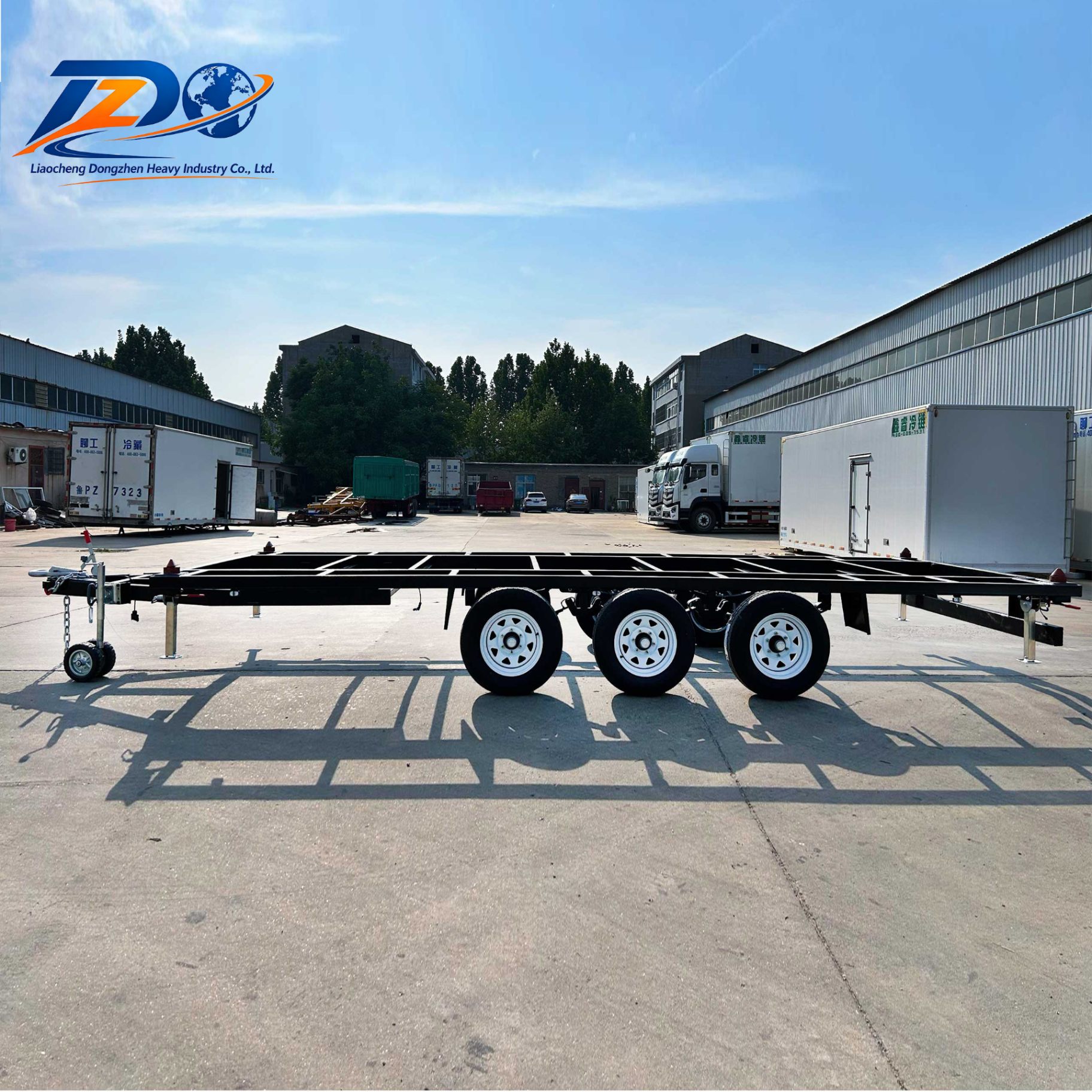
Axle count should match your payload requirements. Common configurations range from single-axle for light loads to tri-axle or quad-axle for heavy-duty applications.
Braking System
Safety is paramount. Your braking system must be matched to your trailer’s weight and operating conditions:
Electric brakes offer precise control and are common in light to medium trailers.
Hydraulic brakes provide strong stopping power for heavy-duty applications.
Pneumatic (air) brakes are the standard for large commercial trailers, offering reliable performance under heavy loads.
Ensure your braking system complies with the applicable Australian Design Rules (ADRs) and the requirements set out in Vehicle Standards Bulletin 1 (VSB 1) for your target market.
Certifications and Compliance
When importing trailers from China, verify that the manufacturer holds relevant certifications:
- CE marking for European markets
- ISO 9001:2015 for quality management
- SGS, TUV Rheinland, BV third-party inspection reports
DONGZHEN Heavy Industry holds all major certifications including CE, ISO 9001, SGS, TUV Rheinland, and BV, ensuring our trailers meet international standards. In Australia, importers should confirm compliance with the ADRs and the applicable Vehicle Type Approval (VTA) pathway under the Road Vehicle Standards Act 2018 (RVSA) before registering a trailer for road use.
After-Sales Support
A trailer is a long-term investment. Choose a manufacturer that offers:
- Comprehensive warranty coverage
- Readily available spare parts
- Technical support across time zones
- Installation and commissioning guidance
Conclusion
Selecting the right trailer requires careful analysis of your transport needs, operating environment, budget, and regulatory requirements. By partnering with an experienced manufacturer like DONGZHEN Heavy Industry, you gain access to 15+ years of engineering expertise, a complete range of trailer types, and OEM/ODM customisation capabilities.
Contact our team today to discuss your trailer requirements and get a tailored solution for your transport business.